Where Does Jersey's Food Really Come From? From Farm Shops to Supermarket Shelves
Jersey Royals, crab, milk and oysters — our food story is famous. But how much of what we eat is actually local, and where does the rest come from?
Where does Jersey's food really come from? We brand ourselves on Royals, dairy, crab and wine, yet most trolleys are full of imports. With food up 3.5% to June 2026 and beef up 19.7% in a year, understanding supply chains isn't foodie trivia — it's household budgeting.
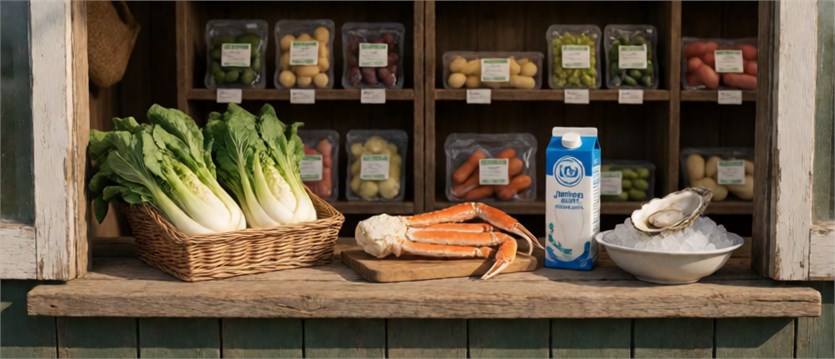
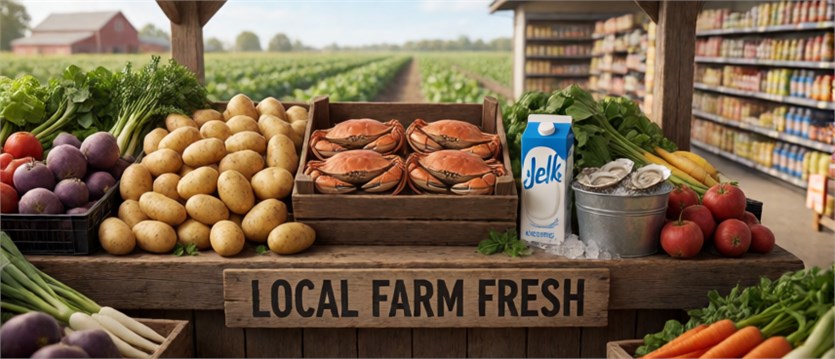
Start with what we still grow and catch brilliantly. Jersey Royals — the kidney potato with Protected Designation — dominate spring fields in St Ouen and St Lawrence, hand-planted on côtils and exported to the UK. Dairy from the pure-breed Jersey cow via Jersey Dairy cooperative in Trinity gives milk, cream, butter and ice cream island-wide. Outdoor tomatoes, courgettes, cauliflower and new potatoes glut in August. Apples for La Mare's brandy, wine and Black Butter, honey from Jersey Honey in Waterworks Valley, lavender and herbs, plus cut flowers from Trinity growers. Sea-wise: lobster, crab, scallops and wet fish landed at Victoria Pier via The Fresh Fish Company and Faulkner Fisheries at L'Etacq, oysters from Jersey Oyster beds, and bass when in season.
How much is that of our diet? By value, a minority. Jersey imports the bulk of cereals, meat, poultry, fruit, veg out of season, and ambient groceries via Grand Marché, Sandpiper's M&S and Morrisons Daily, and UK wholesalers through Ferryspeed and DFDS freight including Caesarea Trader. Freight, harbour handling and 5% GST shape every price: milk £1.75 a litre, loaf £4.05 a kilo, eggs £4.57 a dozen, chicken £8.79 a kilo, beef £12.53. Global shocks — cocoa up with poor harvests, beef up 62% in five years — land straight on our shelves because we have no hinterland to buffer them.