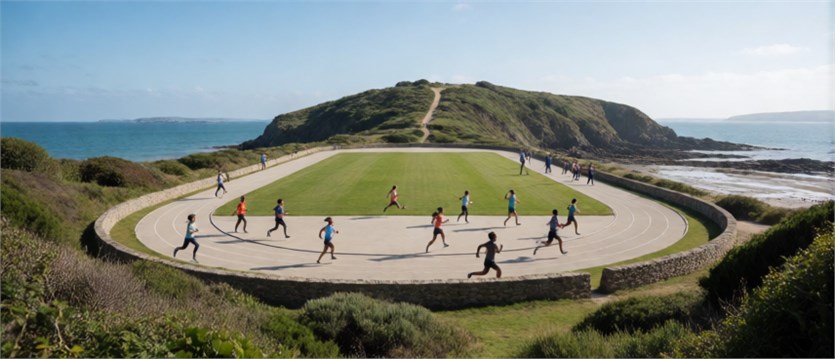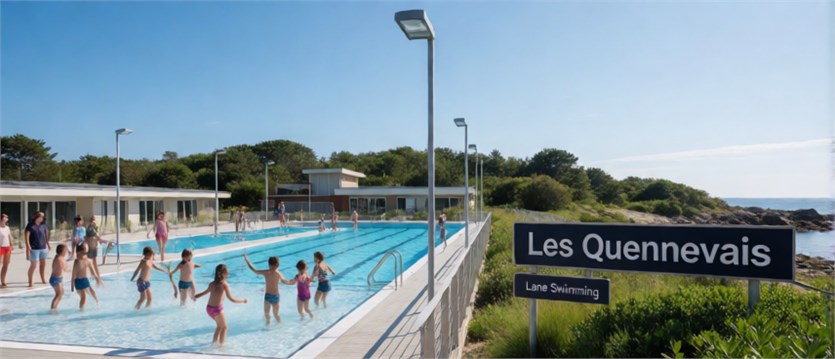
Living in Jersey, you quickly learn that sport here is never just sport. With only nine miles by five to play with and the sea in every direction, how we stay active, where we play, and who pays for it all becomes a genuinely island story. I have watched kids' football at Springfield on a wet Saturday, queued for lane swimming at Les Quennevais, and felt that particular inter-island tension when Jersey face Guernsey. This is my attempt to make sense of where Jersey sport is in 2026 — the venues, the money, the costs you actually pay, and where it is all heading next.
The first thing to understand is that the Government of Jersey does not directly run sport in the way it used to. Since 2017, delivery has been outsourced to an arm's-length charity called Jersey Sport. The Government sets the framework through a strategy called Inspiring an Active Jersey, first published in 2020 and updated in September 2025, and then funds Jersey Sport with an annual grant to deliver much of it. In practice, the Infrastructure and Environment department looks after the public gyms, pools, playing fields and the Active centres, while the Department for the Economy holds the purse strings for Jersey Sport and checks it delivers value for taxpayers. It is a slightly complicated split, and a 2023 independent review said roles had become blurred, but for most of us it boils down to this: Active runs the facilities, Jersey Sport champions clubs and hands out a lot of the money.
And there is more money around in 2026 than many people realise. Jersey Sport's SUPPORT IN SPORT fund is distributing £1,000,000 to local sport this year, made possible by a mix of Government funding, a realignment of Channel Islands Lottery money, Jersey Sport's own fundraising, and the generous legacy of the late Valerie Guy. It is split into very practical pots: Travel, Performance Sport, Sport in Schools, Sport Activation for facilities and workforce, a Safe and Sustainable governance health-check, and Sports Access to remove financial barriers for children. Travel is the one every parent of a talented teenager knows about — around £270,000 to £284,000 for 39 organisations in 2026 to help with flights, boats, coaches and hotels, because anything above a certain level inevitably means going off-island. Since 2021, the Lottery-funded Sport and Active Lifestyles Fund via the Jersey Community Foundation has also awarded over £810,000 to clubs and charities. Add in a pilot Junior Active scheme launched in late 2025 to give under-18s — who already get 50% off at Active centres — free or further subsidised access, and you can see a deliberate push to stop cost becoming the reason kids drop out.
If you want to understand Jersey venues, start with Springfield Stadium in St Helier. It has been there since 1885, first as an agricultural showground for the Royal Jersey Agricultural and Horticultural Society, first used for the Muratti in 1905, and now as the island's closest thing to a national stadium. The States own it, the main pitch holds about 2,000 with a 960-seat grandstand, and it is home to the Jersey Football Association and Jersey Bulls. There is a public park around it, a playground, an all-weather ball court and a cycle path, and in 2023 its gym was refurbished with equipment moved over from Fort Regent to triple capacity from around 1,000 members. It is old, a little worn in places, but on a Muratti final day or a Bulls home game in the Isthmian League, there is nowhere better to feel what Jersey football means.
Head west and you hit the other workhorse: Les Quennevais Sports Centre in St Brelade. For many families this is Active — gym, two swimming pools, group fitness studios, sauna and steam, playing fields, home to the Active Swim School and local galas. Next door is the Les Quennevais skatepark, over 3,000m² with a huge 9-foot bowl, funded from Jersey Development Company profits and much loved by a different generation. Then there is Aquasplash at the Waterfront, with its flumes and family sessions. After 25 years run by Serco, with taxpayer subsidies rising above £1m a year, the Government brought Aquasplash back in-house under Active on 1 October 2026, investing over £250,000 this year to stabilise it. For rugby people, the spiritual home is Stade Santander International at St Peter, home of Jersey RFC — a proper club ground that has hosted everything from Championship rugby in the professional days to the Siam Cup.
No article about Jersey venues in 2026 can avoid Fort Regent. For decades it was the indoor centre — pool, gym for around 1,000 members, courts, gigs, play zone — perched above St Helier with that unforgettable cable car memory. But the building, with 50-year-old electrics, fragile transformers that are now obsolete, asbestos, and a leaking roof and glazing, had simply reached the end. The Infrastructure Minister warned closure could be mandated on any day by critical failure, and ministers decided a full closure at the end of 2025 was safer and cheaper than a long phased shutdown. When it re-opens at the end of 2028, under a £110m regeneration delivered with the Jersey Development Company, it will not be a like-for-like sports hall. The published concept is for Jersey's premier all-weather leisure and entertainment destination: arena, cinemas, ten-pin bowling and arcade, eGaming, indoor climbing and bouldering, bars and restaurants, a piazza, rooftop bar, skatepark in the East Ditch, children's sensory park and soft play, and some retained sport. Play Zone closed on 29 September 2025, with Tintos Soft Play opening at the Waterfront in the old Arcadia premises on 1 October as interim cover.
What replaces Fort Regent for day-to-day sport is not one building but a network, and that is deliberate government policy. The centrepiece is Oakfield Community Sports Centre, an £8 million investment that opened in October 2025. It offers a 2,659m² multi-use sports hall across three courts plus a dedicated state-of-the-art gymnastics centre, with capacity for around 3,000 users. I toured the early photos like everyone else, and club feedback — from Jersey Netball Association to the Sports Council — has been genuinely enthusiastic, even if the move itself was disruptive after decades centred on Fort Regent. Schools got access to the studio, gym and 3G pitch from the first day of autumn term, with full opening in mid-September. Transitional funding, phased rents and tailored moves — Play Zone to Arcadia, Empire Skating to Haute Vallée — were put in place to avoid clubs being left homeless. Longer term, the Inspiring Active Places facility strategy wants geographically balanced indoor provision, unlocking school sports halls for community use in evenings and weekends, modernising funding models, and building inclusive multi-use spaces rather than single-sport white elephants.