Owning an EV in Jersey: Brilliant Island Car, With a Few Catches
Jersey might be the easiest place in the British Isles to live with an electric car — nine miles by five, nowhere to rush to, and cheap French electricity. But what is it actually like day-to-day?
I spend a lot of time driving around the Island visiting businesses for Buy.je, and over the last couple of years I have noticed the same thing you probably have: the quiet ones taking over. Teslas on Victoria Avenue, electric Transits outside building sites, a BYD parked outside the Co-op in Sion, a Honda e squeezed into a St Helier residents' bay. At the end of December 2025 there were already around 4,000 full-electric and another 4,850 hybrid vehicles registered here, according to the Government of Jersey, and that number has only kept climbing through 2026.
So is Jersey genuinely a great place to own an EV, or is it just fashionable? I dug into dealers, chargers, bills, servicing and the eternal question — what happens when you want to leave — to find out.
You can buy almost anything here now
This surprised me. For an island of 100,000 people, choice in 2026 is excellent. Van Mossel Jacksons at La Rue Fondon is now the big player, as the authorised retailer for Audi, BMW, Volkswagen, Volvo, Mercedes-Benz, MINI, Porsche, Jaguar Land Rover, smart and — tellingly — BYD. Van Mossel Motor Mall covers the more mainstream end, including Ford, Peugeot, Citroën and the Linton Cars operation, which has leaned hard into being the island's EV specialists and will source from their UK network if they don't have what you want in stock.
Then you have Bel Royal Motors on Victoria Avenue for Kia and Mazda — both brands with very strong EVs right now in the EV3, EV5, Niro EV and MX-30 — Derek Warwick for Honda, and TrustFord at Pont du Val. On top of the franchises there is a healthy independent scene: Autocare, JEMEC, Bespoke Auto Service, Automotive.je and others who will find you a nearly-new EV from the UK and handle the import, registration and Vehicle Emissions Duty paperwork.
And the used market has finally matured. When I checked recently there were around 89 pure-electric cars listed on AutoFinder.je, starting from about £5,995 for an older Leaf or Zoe, up through a 2022 Hyundai Kona around £16,995, a nearly-new Ford Puma Gen-E around £19,995, a BYD Dolphin Surf around £17,995, a Ford Explorer around £29,995 and a Kia EV5 around £39,995. In other words: you no longer have to buy brand new to go electric, and you no longer have to settle for whatever one dealer happens to have.
Jersey is almost unfairly perfect for range
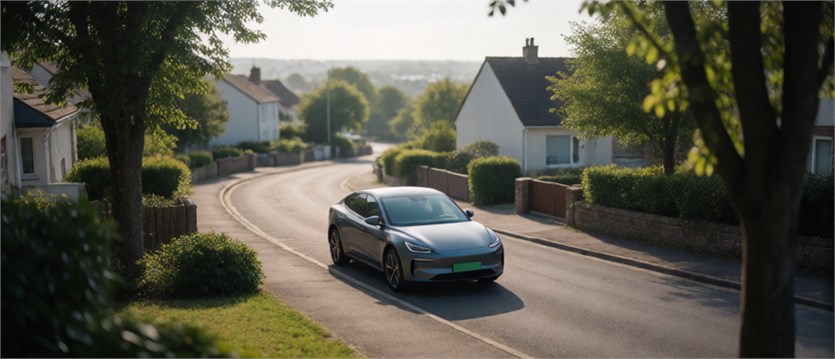
Let's get the obvious out of the way. Jersey is nine miles by five. The maximum speed limit is 40mph, and most of the time you will be doing a lot less than that behind a tractor on the St Ouen's coast road.
That makes range anxiety — the great mainland obsession — almost irrelevant here. Even a tired first-generation Nissan Leaf with 80 miles of real range can do St Helier to Gorey and back three times over. A modern BYD, Kia, Hyundai, Tesla or VW with 200-280 miles will do a full week of school runs, shopping, commuting and a Sunday loop of the coast on a single charge. EVs also love exactly the sort of driving Jersey forces on you: stop-start, low speed, lots of regenerative braking. You will often get better efficiency here than the official WLTP figure, not worse.
Average annual mileage here is far lower than in the UK — many islanders do 4,000-6,000 miles a year — which is why Jersey Electricity's home charging plans are built around 6,000 and 12,000 miles. If there is anywhere an EV battery will live a long, unstressed life, it is here.
Charging at home is the easy win
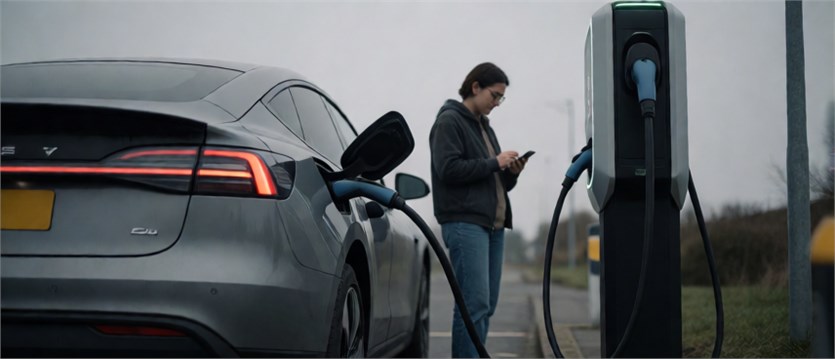
If you have a driveway or garage, this is where owning an EV in Jersey becomes a no-brainer. Jersey Electricity's Easycharge scheme will install an Ohme Home Pro 7.4kW smart charger free of charge and wrap it into a subscription: £30 a month for around 6,000 miles a year of overnight power included, £45 a month for around 12,000 miles, or £85 a month for unlimited, on a three-year minimum term. It is roughly three times faster than granny-charging off a three-pin plug, it is properly safe, and any faults get a technician visit included.
If you would rather just pay for what you use, home electricity on the standard General Domestic tariff is 22.20p per kWh including GST from March 2026 — still noticeably cheaper than the UK price cap, which sits around 26.3p per kWh. Do the maths at a typical 3.5-4 miles per kWh and 100 miles costs you roughly £5.50-£6.30 at home. Compare that with petrol, which was sitting at 157.9p to 187.5p per litre in Jersey in June 2026 according to Prices.je, where the same 100 miles in a 35mpg petrol car costs £20-£24 in fuel alone. That gap pays for a lot of battery.
The honest caveat is flats and terraces without off-street parking. Easycharge explicitly requires off-road parking, and if you are in a town flat relying entirely on public chargers, the convenience and cost equation changes. Check with your landlord, management company or parish before you assume you can run a cable across the pavement — you can't.
The public network is better than most visitors expect
For top-ups around town, Jersey Electricity's Evolve network is genuinely good for an island this size. There are now well over 100 public charge points spread from the Powerhouse in St Helier to Gorey and St Aubin, including 7kW and 22kW posts for longer stays, 50kW rapids, and the Channel Islands' first 150kW ultra-rapids — good for roughly 100 miles in about nine minutes of charging.
You use it via an Evolve account and the Charge Global app, or a charging tag, with contactless Visa/Mastercard now available on the rapid and ultra-rapid units. Pricing was held at 2025 rates into 2026: 30p per kWh peak (7am to midnight) and 15p off-peak for the slower posts, 32p peak and 16p off-peak for rapids and ultra-rapids, with a 10% surcharge for contactless and a £5 overstay fee if you sit on a rapid for more than two hours. It is more expensive than home charging, as it should be, but still well under UK rapid prices, which are often 65-85p per kWh.